
It takes a special kind of conviction to follow up a massive hit with a sequel that refuses to play it safe. With Dhurandhar: The Revenge, Aditya Dhar hasn’t just made a sequel; he’s completed a 7-hour-plus odyssey that will likely be spoken about in the same breath as the Baahubali duology for years to come. It is ambitious, unapologetically violent, and deeply grounded in a reality that many filmmakers are too afraid to touch.
The Narrative: A Seamless Evolution
The film picks up the pieces of Jaskirat Singh Rangi’s life with a haunting backstory, leading into a massive opening action set-piece that sets the stakes. We see the fallout of his actions—the punishment, the redemption, and finally, his recruitment by Ajit Sanyal (R. Madhavan). While the first part was about the mission, The Revenge is about the cost of that mission. It’s a natural progression of characters who are older, colder, and more driven.
Performances: Ranveer Singh’s Magnum Opus
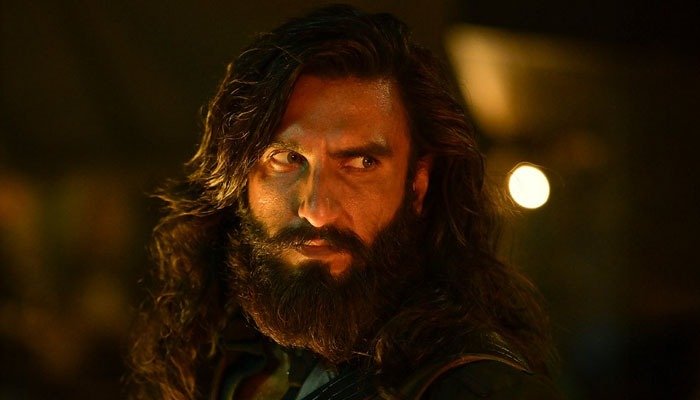
Let’s be clear: This is the best performance of Ranveer Singh’s career, period. Within the first twenty minutes, he disappears. There is no “superstar” here, only a beast named Hamza Ali Mazari. He carries the weight of the film on his shoulders, navigating the complex demands of a spy’s double life with an ease that proves why he is at the top of the food chain in Indian cinema.
The supporting cast is equally lethal:
• R. Madhavan: Finally gets the meat he deserves. His Ajit Sanyal is the backbone of the film, complete with whistle-worthy moments that prove his screen presence is unmatched.
• Sanjay Dutt: We cannot overlook the aura Dutt brings as SP Chaudhary Aslam. He has carried a specific style and grit from the first frame of Part 1 right through to the end of this film with effortless ease.
• Arjun Rampal: Arjun as Major Iqbal is genuinely menacing. He doesn’t try to mimic Akshaye Khanna’s past brilliance; he creates a new brand of fear. He looks, breathes, and acts like a threat.
• Sara Arjun: Though she has less screen time than the first part, she delivers an emotionally driven performance that hits hard.
• Rakesh Bedi: A revelation. His portrayal of Jameel Jamali is a career-best highlight, adding a layer of authenticity that is rare in the spy genre.
• Danish Paddor: While his role is brief, he leaves a mark of pure atrocity, specifically one “beheading” sequence that is as stomach-churning as it is memorable.
The supporting cast also done a commendable job in the film. And the whole credit goes to the casting director, Mukesh Chhabra. Every character feels hand-picked by Mukesh Chhabra to ensure there isn’t a single “weak” performance in the frame.
A Technical Marvel: From Pakistan to the Climax
One of the biggest stars of this film is the world-building. The cinematography team deserves a standing ovation for how they’ve captured Pakistan. This isn’t a “filmy” version of Karachi or Islamabad; it feels lived-in, dusty, and dangerous, as real as it gets. This authenticity feeds into the film’s final act. The climax of Dhurandhar: The Revenge is arguably one of the longest and most well-executed sequences in recent Indian cinema history. It’s a masterclass in tension, pacing, and payoff.
The Sound of Vengeance: Shashwat Sachdeva’s Score
There’s been a lot of chatter about the music label change, but let’s give credit where it’s due: Shashwat Sachdeva has delivered a banger of a soundtrack. While some might miss the specific “vibe” of the first part, this installment offers a new layer of intensity. The way the music interacts with the visceral, gore-filled action sequences is brilliant.
The Flaws
However, the film isn’t without its scars. The “flows” are there, sometimes the music cuts abruptly or the editing feels a bit jagged, but the sheer quality of the compositions keeps the momentum alive.
The Craft: Action, Gore, and Reality
Aditya Dhar and Action Choreographers have maintained a “hyper-real” feel. The action is grounded, tactical, and far more violent than its predecessor. If you’re looking for gravity-defying stunts, look elsewhere. This is bloody, visceral, and gritty.
Ideology and the “Real” Lens
This film isn’t going to be for everyone, and that’s a choice the makers clearly leaned into. It navigates a complex web of political ideologies and real-world incidents with a bluntness that might polarize the audience. Whether you agree with the film’s worldview or not, you have to respect the brilliance with which Dhar weaves fiction into the fabric of real history. It’s a gutsy portrayal of the “invisible” lives spies lead and the brutal paths they must walk.
The Man at the Helm: Aditya Dhar’s Vision
Aditya Dhar has officially cemented himself as India’s “Peak Detailer.” It takes a certain kind of madness and mastery to pull off a 7-hour duology with this level of consistency. Dhar doesn’t shy away from the darkness; he leans into it. He has crafted a world where the stakes feel personal and the consequences feel permanent. By the time the credits roll, you realize you haven’t just watched a movie; you’ve witnessed a filmmaker’s manifesto on what the spy genre in India can–and should–be.
Final Verdict
Dhurandhar: The Revenge is a bold statement. It tackles political ideologies and real-world friction through a fictional lens with ballsy execution. It’s a film that respects its audience’s intelligence, ending on a note that perfectly encapsulates the lonely, harrowing life of a spy.
Despite some issues, it stands as a landmark achievement. Every department, from casting to choreography, has given their absolute best. It’s a reminder that when you combine a visionary director with a cast that’s willing to bleed for the screen, you get magic.
Make sure you stay through the credits, the mid-credit and post-credit scenes are essential viewing.
Review by: Shrenik