
Batwara 1947 is an emotionally charged Hindi period drama that revisits the human cost of the 1947 Partition. Co-written and directed by Rajkumar Santoshi and produced by Aamir Khan, the film is based on Asghar Wajahat’s acclaimed play Jis Lahore Nai Vekhya, O Jamya E Nai.
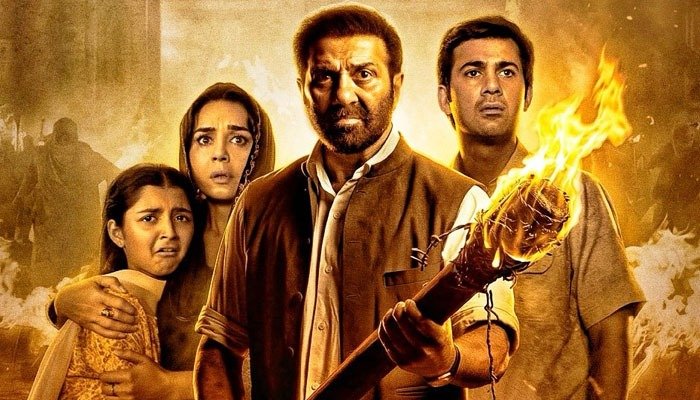
With a strong cast led by Sunny Deol, Preity Zinta and Shabana Azmi, the film tells a deeply personal story of displacement, identity, loss and humanity. While the performances and emotional core work well, the film’s music is one area where it falls short.
Plot
The story follows Sikander Mirza, who migrates from Meerut to Lahore with his wife Hameeda, son Javed and daughter Tanvir after Partition. After spending time in a refugee camp, the family is allotted a large haveli whose Hindu owners have migrated to India.
Their new beginning is disrupted when they discover an elderly Hindu woman, known as Mai, still living inside the haveli. She refuses to leave, claiming the house is her ancestral home.
What begins as a dispute over property gradually becomes a powerful exploration of the emotional wounds created by Partition. Sikander wants to move forward with his family, while Mai remains determined to protect the only home and memories she has left.
The story works because it focuses on ordinary people caught in extraordinary circumstances rather than turning Partition into merely a backdrop for spectacle.
Sunny Deol’s Performance
Sunny Deol gives a sincere and emotionally controlled performance as Sikander Mirza. His character goes through anger, frustration, helplessness and eventually a deeper understanding of the situation around him.
Deol’s restrained approach suits the character, particularly in the quieter emotional scenes. He brings enough intensity to the role without making Sikander feel one-dimensional.
Shabana Azmi Steals the Show
Shabana Azmi is the standout performer of the film. As Mai, she brings tremendous dignity and emotional depth to a woman who has lost almost everything but refuses to surrender her home.
Her expressions, pauses and dialogue delivery give the character considerable weight. The scenes between Mai and Sikander form the emotional backbone of the film, and Azmi ensures that Mai remains memorable throughout.
Preity Zinta and Supporting Cast
Preity Zinta gives a warm and convincing performance as Hamida, adding emotional balance to the family.
Karan Deol, Ali Fazal, Abhimanyu Singh, Khushi Hajare, Kanikka Kapur and Isha Sandhir provide good support and help create a convincing ensemble around the central characters.
Direction
Rajkumar Santoshi handles the sensitive subject with seriousness and emotional restraint. Instead of making the film solely about communal conflict, he places human relationships at the centre of the narrative.
The haveli works effectively as a symbol of home, memory and belonging. The director uses the central conflict to show how political decisions can have devastating consequences for ordinary families.
The film’s emotional moments are among its strongest elements, although the pacing occasionally feels uneven.
Music – A Weak Point
Unfortunately, the songs are not among the film’s strengths. While the background score supports the emotional atmosphere in several places, the songs themselves don’t leave the desired impact.
For a period drama dealing with such an emotional subject, the music could have added considerably more depth and memorability. Instead, the songs sometimes feel less engaging than the story and performances deserve.
This is one of the areas where Batwara 1947 could have been stronger.
Negative Points
- Songs are underwhelming and fail to leave a lasting impression.
- Uneven pacing slows down the narrative in certain portions.
- Some scenes feel slightly stretched, affecting the overall momentum.
- The supporting characters could have been given more depth and development.
- The film’s emotional impact is not consistently maintained throughout.
- At times, the storytelling feels predictable, especially for viewers familiar with Partition dramas.
- The film’s strong performances and central story are somewhat let down by its inconsistent musical and narrative treatment.
Final Verdict
Batwara 1947 succeeds primarily because of its story, emotional depth and performances, particularly Shabana Azmi and Sunny Deol. Rajkumar Santoshi keeps the focus on humanity and personal loss, giving the film a meaningful emotional foundation.
The uneven pacing and disappointing songs prevent it from becoming a truly outstanding Partition drama, but there is still plenty here for audiences who enjoy serious historical stories with strong performances.
Verdict: A heartfelt and well-acted Partition drama with a powerful central story and excellent performances, but its music and occasional pacing issues hold it back from greatness.